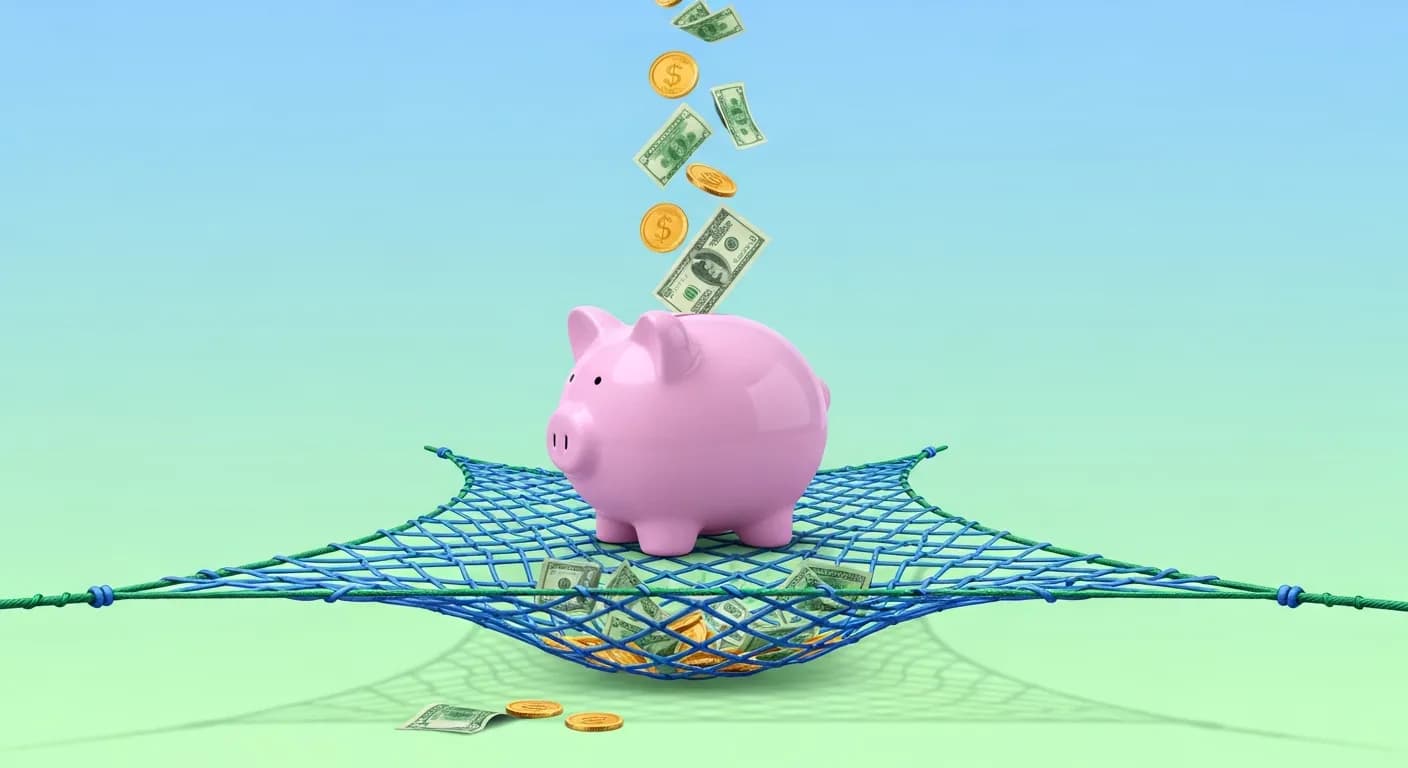

When deciding whether to prioritize credit card debt or emergency savings, households need to balance interest costs with the risk of an unexpected expense. In this expert Q&A, Loretta Kilday, DebtCC Spokesperson at Debt Consolidation Care, explains her approach.
Expert contribution by Loretta Kilday, DebtCC Spokesperson, Debt Consolidation Care. Contribution provided through Connectively; introduction and editorial context prepared by FinanceFirst.
The question
When a household has both high-interest credit card debt and little or no emergency savings, what should it prioritize first?
Build a $1,000 Buffer First
Loretta Kilday’s response:
This is one of the most common dilemmas I see, and the tension is real. High-interest credit card debt is expensive to carry, but having no financial cushion means one unexpected expense can push someone right back into deeper debt. So the answer isn't as simple as "always pay off debt first" or "always save first."
The practical threshold I use is this: if your credit card interest rate is above 15%, start by building a small emergency fund of $1,000 before aggressively attacking the debt. Once you have that cushion, shift your focus to the high-interest balance. If your rate is below 15%, you have a little more flexibility to split the difference, but the emergency fund still comes first.
The reason this works is mostly behavioral, not mathematical. The math might tell you that paying down a 24% APR card first saves more money on paper. But if you put every spare dollar toward debt and then your car needs a $700 repair, you're likely putting that repair on the same credit card you just paid down. You haven't made progress; you've just gone in a circle. A small emergency fund breaks that cycle.
Here's a situation that illustrates it well. Someone carries $8,000 in credit card debt at 22% interest and has nothing in savings. They get serious about their finances and start putting $400 a month toward the card. Two months in, their water heater fails. Without savings, that $600 repair goes straight back on the card. Now they're demoralized and back near where they started.
If they had paused for two and a half months first to build a $1,000 buffer, that repair gets covered without touching the card. Then they attack the debt with momentum and without the setback.
The $1,000 threshold isn't a magic number, but it covers most common household emergencies without taking so long to build that you're ignoring serious debt for too long. It's a realistic starting point that protects the progress you're working hard to make.
— Loretta Kilday, DebtCC Spokesperson, Debt Consolidation Care
Editorial context
The $1,000 savings target and 15% interest-rate cutoff are Kilday’s suggested guidelines, not universal rules. The Consumer Financial Protection Bureau explains that an appropriate emergency-fund target depends on your circumstances and that even a small reserve can help. Continue making required debt payments while building savings; directing extra payments toward the highest-interest balance can reduce interest costs. Kilday’s repair scenario illustrates the value of having cash available, rather than establishing that saving first always costs less.
For further reading, see the CFPB’s guide to building an emergency fund and debt-reduction guidance. You can also explore FinanceFirst’s emergency fund calculator to consider a reserve based on your expenses.