Quick answer
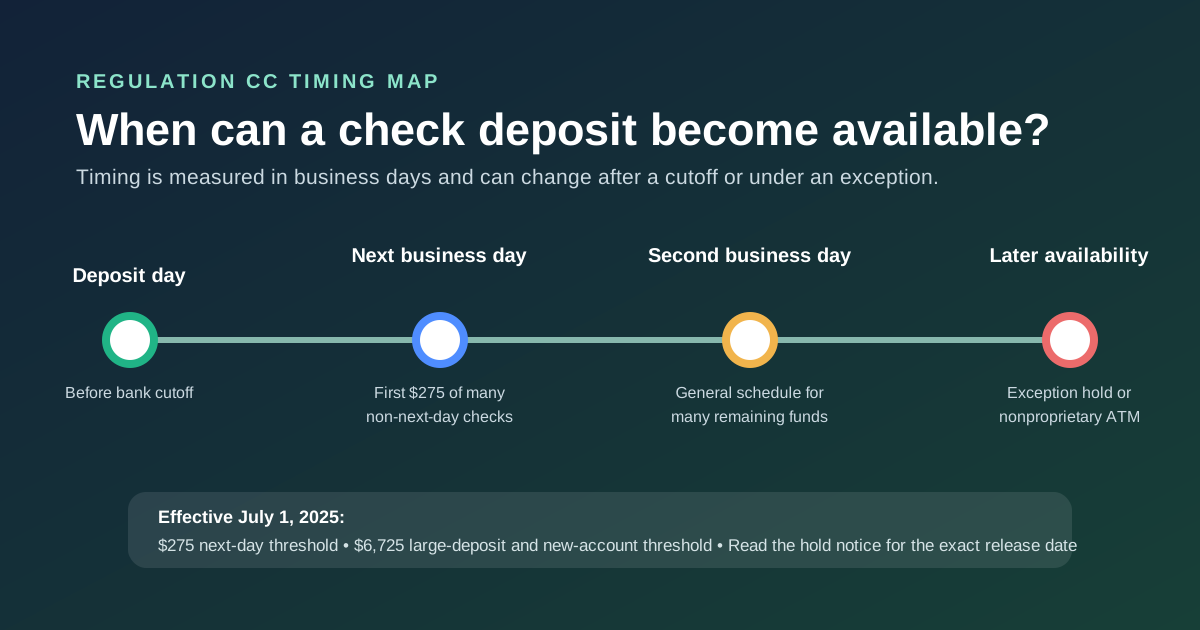
A check showing in account activity is not the same as every dollar being available. Federal Regulation CC sets maximum availability schedules for many deposits, but the result depends on the deposit type, when and where it was accepted, the institution's cutoff time, and whether an exception applies. Your receipt or hold notice should identify the delayed amount and the date it will be available.
Start with three timing rules
- Identify the banking day. A deposit after the posted cutoff, or on a day the branch is closed, can be treated as received on the next banking day.
- Identify the deposit type. Cash, electronic payments, government checks, cashier's checks, and other checks can follow different schedules and conditions.
- Read the hold notice. An exception can extend the normal schedule, but the notice should state the reason and availability date.
Business day and banking day are not interchangeable
Regulation CC defines a business day generally as a calendar day other than Saturday, Sunday, or a federal holiday. A banking day is the part of a business day when an office is open for substantially all banking functions. Mobile, ATM, and branch deposits can have different receipt rules. Check the institution's availability disclosure and the cutoff shown at the deposit channel.
Common availability patterns
| Deposit | General pattern | Important condition |
|---|---|---|
| Electronic direct deposit | Generally available by the banking day after receipt | Confirm the institution actually received the payment |
| Cash deposited in person | Generally next-day availability | Deposits outside a staffed branch can follow another rule |
| Government, cashier's, certified, or teller's check | Can qualify for next-day treatment | Payee, account, and deposit-channel conditions matter |
| Other check | The first $275 is generally available next day, with the remainder following the schedule | An exception may permit a longer hold |
This is a planning summary, not a substitute for the institution's disclosure. A check type that sounds official does not automatically receive faster treatment if the regulatory conditions are not met.
The $275 and $6,725 thresholds
For covered check deposits, the amount generally subject to next-day availability increased to $275 on July 1, 2025. The threshold used for the large-deposit exception increased to $6,725. These amounts are adjusted periodically, so a later reader should verify the current regulation and account disclosure.
For an $8,000 check deposit that otherwise qualifies for the ordinary check schedule, the institution may apply the large-deposit exception to the amount above $6,725. That does not mean the entire deposit is automatically unavailable, and it does not state the exact release day. The notice and the other applicable availability rules determine the result.
When an exception hold may apply
- the account is new under the regulation's new-account rule;
- check deposits on one banking day exceed $6,725;
- the account has been repeatedly overdrawn under the regulatory test;
- the deposited check was previously returned unpaid;
- the institution has reasonable cause to doubt collectibility and documents the reason; or
- an emergency condition interrupts processing.
An institution cannot use reasonable cause as a blanket label. The reason must relate to the check or surrounding facts, and the customer must receive the required notice.
What to verify on a hold notice
- deposit date, amount, and channel;
- the amount available immediately or next day;
- the amount delayed and the stated reason;
- the calendar date the delayed amount will become available; and
- the contact path for an error or urgent question.
Do not schedule payments from a held amount merely because the current balance includes the deposit. Use the stated release date, preserve the receipt, and keep a timing buffer.
If the hold appears wrong
Ask the institution to identify the availability rule and exception it applied. Provide the receipt and notice, and confirm whether the deposit was treated as received after a cutoff. If the explanation does not match the disclosure, use the institution's formal complaint process and keep a written record. The Federal Reserve's Regulation CC guide and the CFPB complaint process provide additional escalation paths.
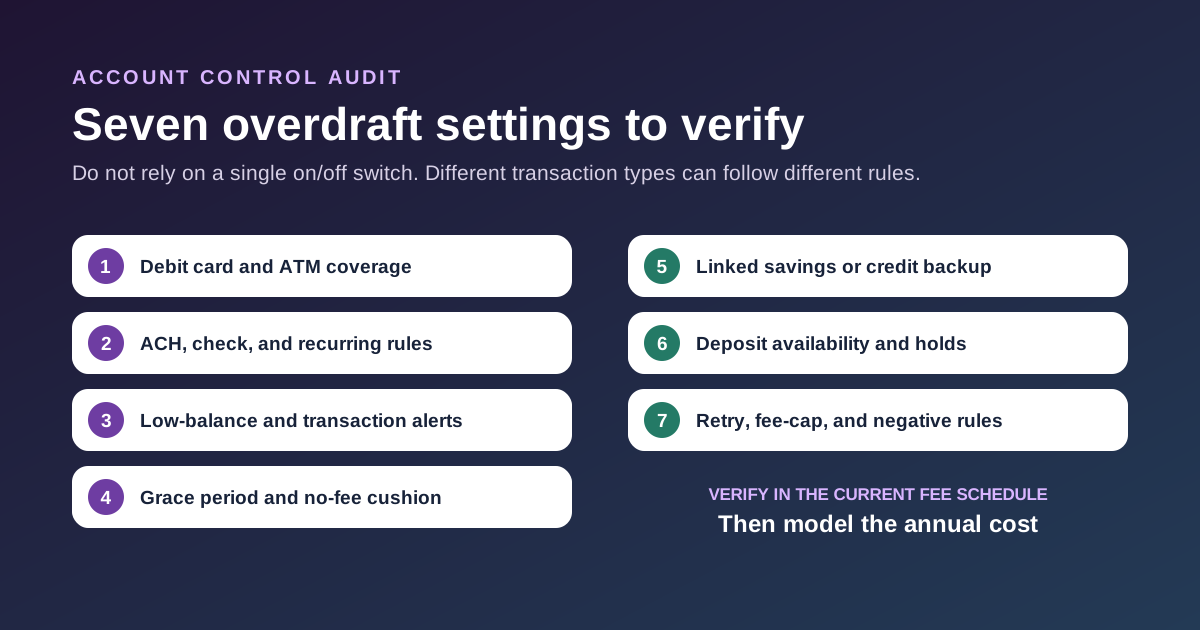
The checking account guide explains how hold timing fits the full account-control system. Also review the overdraft settings audit before relying on a deposit to cover a scheduled payment, and use the Checking Account Cost Calculator to model fees that a mismatch could create.
Frequently asked questions
Can a bank hold a check for seven business days?
Some exception schedules can delay availability beyond the ordinary schedule. The permissible period depends on the exception and deposit facts. Use the written notice for the actual date rather than assuming every hold has the same length.
Does a mobile deposit count as received immediately?
Not necessarily. The institution's mobile-deposit terms and cutoff time determine when it treats the item as received. The app confirmation and availability notice are the practical records to save.
Can the institution reverse a deposited check after funds become available?
Yes. Availability is not a guarantee that a check is valid or finally paid. If a deposited check is returned unpaid, the institution can generally remove the credit under the account agreement.