
Checking Account Cost Calculator
Compare the modeled annual net cost of two checking accounts using service fees, waiver eligibility, ATM use, overdrafts, returned payments, other fees, average balance, and APY.
Last updated August 24, 2026
Checking Account Cost Calculator
Loading calculator...
Account labels do not reveal the cost created by your actual behavior. Enter the current fee schedules for two accounts, then use the same realistic estimates for ATM use, overdrafts, returned payments, average balance, and fee waivers.
How It Works
annual gross fees = service fees + ATM fees + overdraft fees + returned-payment fees + other fees
estimated annual interest = average balance × APY
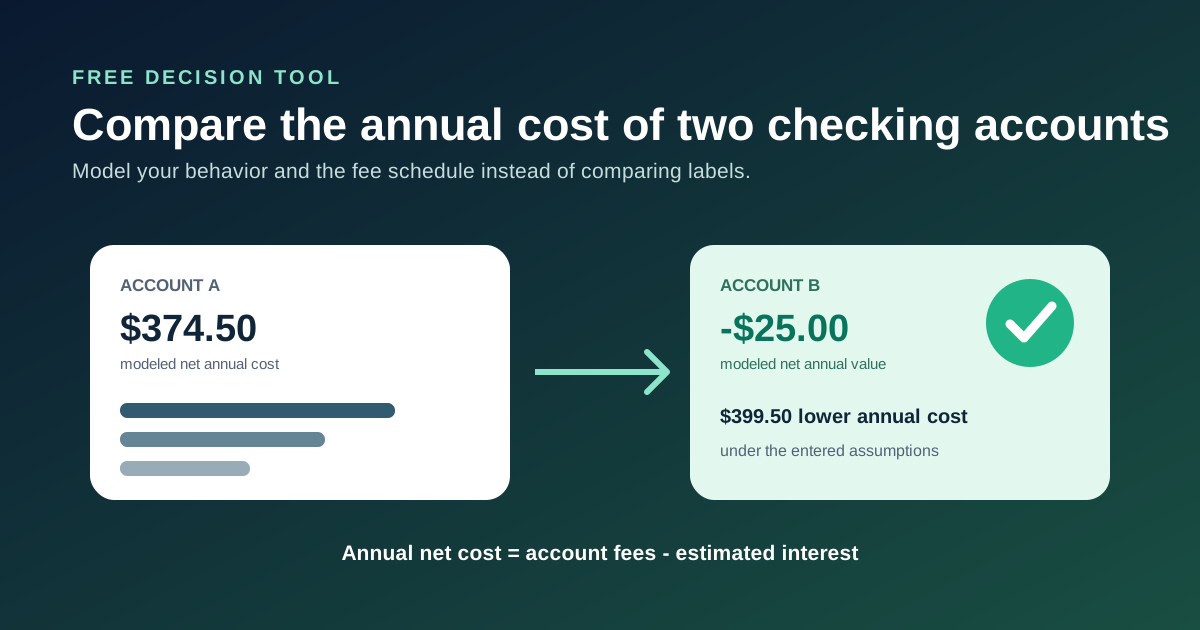
annual net cost = annual gross fees - estimated annual interest
The service-fee term is zero when the monthly waiver switch is on. ATM use is annualized by multiplying monthly use by 12.
Understanding Your Results
A positive annual net cost means modeled fees exceed estimated interest. A negative result means estimated interest exceeds entered fees, but it does not turn the tool into a yield forecast. The lower-cost comparison is the arithmetic difference between the two modeled results.
What the comparison includes
The tool annualizes service and ATM fees, adds entered annual overdraft, returned-payment, and other fees, then subtracts simple estimated interest based on average balance and APY. It shows every category separately so a result can be checked by hand.
How to use the result
Run a normal case and a stress case. A waiver should be switched on only if you expect to satisfy it every month. Review deposit access, insurance, branch or ATM access, digital features, and account support separately because they are not converted into dollars here.
Assumptions Used
- The average balance and APY remain constant for the modeled year.
- Every entered event incurs the entered per-event fee.
- The monthly service fee is waived for all 12 months when its switch is on.
- Merchant fees, late fees, bonuses, rewards, taxes, and opportunity cost are excluded.
Important Notes
- •Use the current fee schedule and account agreement, not a promotional summary.
- •Run more than one scenario when a fee waiver or shortfall count is uncertain.
- •Non-price features such as access, support, deposit speed, and fraud controls require a separate comparison.
Warnings
- •This educational estimate is not financial, legal, or banking advice.
- •A real account can use daily balances, changing APYs, fee caps, grace periods, and transaction-order rules this annual model does not simulate.
- •A fee entry does not establish that the fee applies or is lawful in a particular transaction.