Quick answer
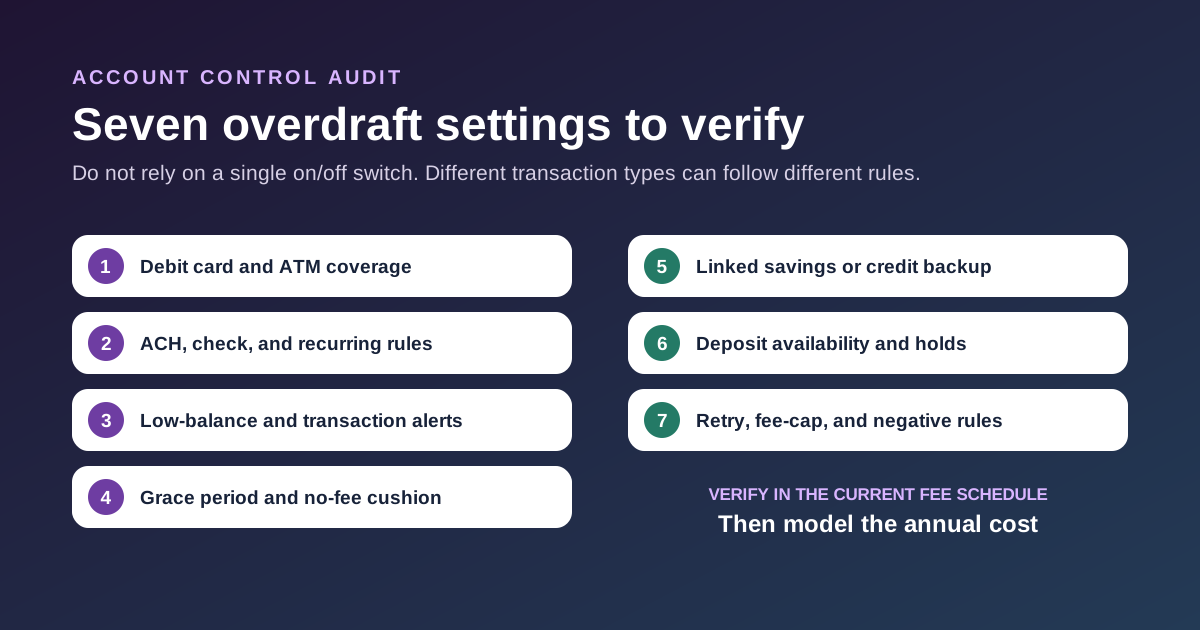
An overdraft setting is not one universal switch. Audit seven items separately: one-time debit-card coverage, ATM coverage, checks and ACH, recurring debit payments, linked-account transfers, overdraft credit, and alerts or negative-balance deadlines. Save the current fee schedule and confirmation after every change.
Protection and coverage are different products
Overdraft protection often means an automatic transfer from savings or a line of credit. Overdraft coverage often means the institution may pay an item even when the account lacks funds, potentially for a fee. Product names vary. The agreement, current election, and fee schedule control the outcome.
| Transaction type | Possible shortfall outcome | What to verify |
|---|---|---|
| ATM or one-time debit purchase | Declined or paid under an affirmative overdraft election | Regulation E opt-in status and fee |
| Check or ACH debit | Returned, paid into overdraft, or transferred from another source | Account policy, returned-item fee, and merchant consequences |
| Recurring debit-card payment | May be treated differently from a one-time purchase | How the merchant coded the transaction |
| Linked transfer | Transfer from savings, credit, or another account | Transfer fee, minimum amount, credit APR, and limits |
The seven-setting audit
- One-time debit-card purchases. Confirm whether you affirmatively opted in to overdraft fees for ordinary debit purchases. Regulation E generally prevents a fee for paying this transaction type without the required opt-in.
- ATM withdrawals. Verify the separate ATM election and whether the terminal will display a fee or warning before completion.
- Checks and ACH debits. The one-time debit-card opt-in rule does not extend to checks and ordinary ACH debits. Ask whether the institution returns or pays them and what each result costs.
- Recurring debit payments. Confirm how recurring card transactions are classified. A subscription coded as recurring can follow a different rule from a one-time card purchase.
- Linked-account transfer. Compare the transfer fee and minimum transfer with the cost of an overdraft, and keep enough in the linked source.
- Overdraft line of credit. Review the APR, transfer increments, minimum finance charge, and approval requirements. This is credit, not free account coverage.
- Alerts and cure period. Set a low-balance alert above zero, learn when alerts are sent, and verify any deadline for restoring a negative balance.
Do not assume a universal federal fee cap
A 2024 CFPB rule would have changed overdraft treatment for certain very large institutions, including a benchmark option of $5. Congress disapproved that rule in 2025, and it has no force or effect. There is no universal federal $5 overdraft-fee cap in effect. Verify the current account disclosure rather than relying on an old headline.
Audit the balance method too
Ask which balance the institution uses to decide whether an item overdraws the account and in what order items post. An account can authorize a card purchase while funds appear sufficient, then settle it after other activity reduces the balance. Keep your own register and use the safe-to-spend balance method.
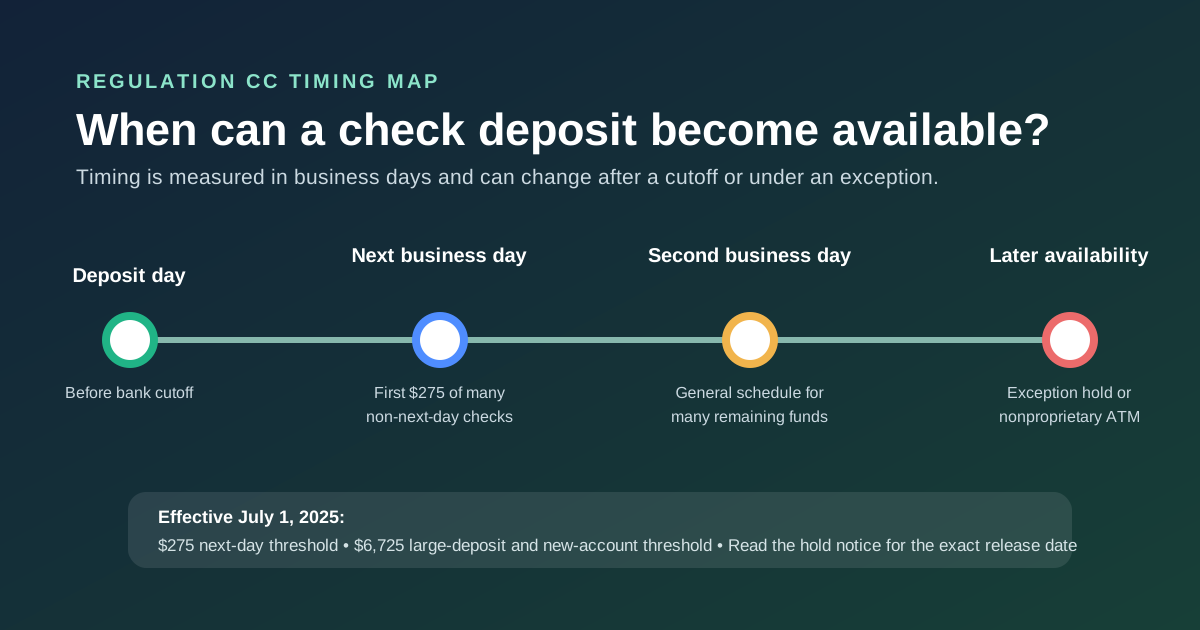
A deposit does not solve the timing problem until the funds are available. Read how check-deposit holds work before promising a held amount to a bill.
Calculate the annual exposure
Use the Checking Account Cost Calculator with the fees from your disclosure and your own expected event counts. Run a base case and a stress case. The comparison can reveal whether a monthly fee with useful waivers costs less than a nominally free account with expensive mistakes.
How to question a fee
- Save the statement, balance screenshots, transaction timestamps, and applicable disclosure.
- Ask which transaction created the fee, which balance was used, and whether the item was ATM, one-time debit, recurring debit, check, or ACH.
- Compare the answer with your election and account terms. Request a correction or courtesy refund when appropriate.
- If unresolved, use the institution's complaint path and the appropriate federal or state regulator.
FinanceFirst's Banking Friction Report 2026 provides broader context. The checking account guide joins these settings with fees, insurance, holds, and account selection.
Frequently asked questions
Does opting out stop every overdraft fee?
No. The Regulation E opt-in rule focuses on ATM and one-time debit-card transactions. Checks, ACH debits, recurring card payments, returned items, linked transfers, and negative-balance policies can still create costs.
Can an institution pay an item after I opt out?
The result depends on the transaction type and agreement. An opt-out for ATM and one-time debit fees does not determine how checks or ACH debits are handled.
Is linked savings always cheaper?
No. Compare the transfer fee, minimum transfer, savings balance, and frequency of shortfalls. A linked account with insufficient funds does not provide a reliable backstop.