
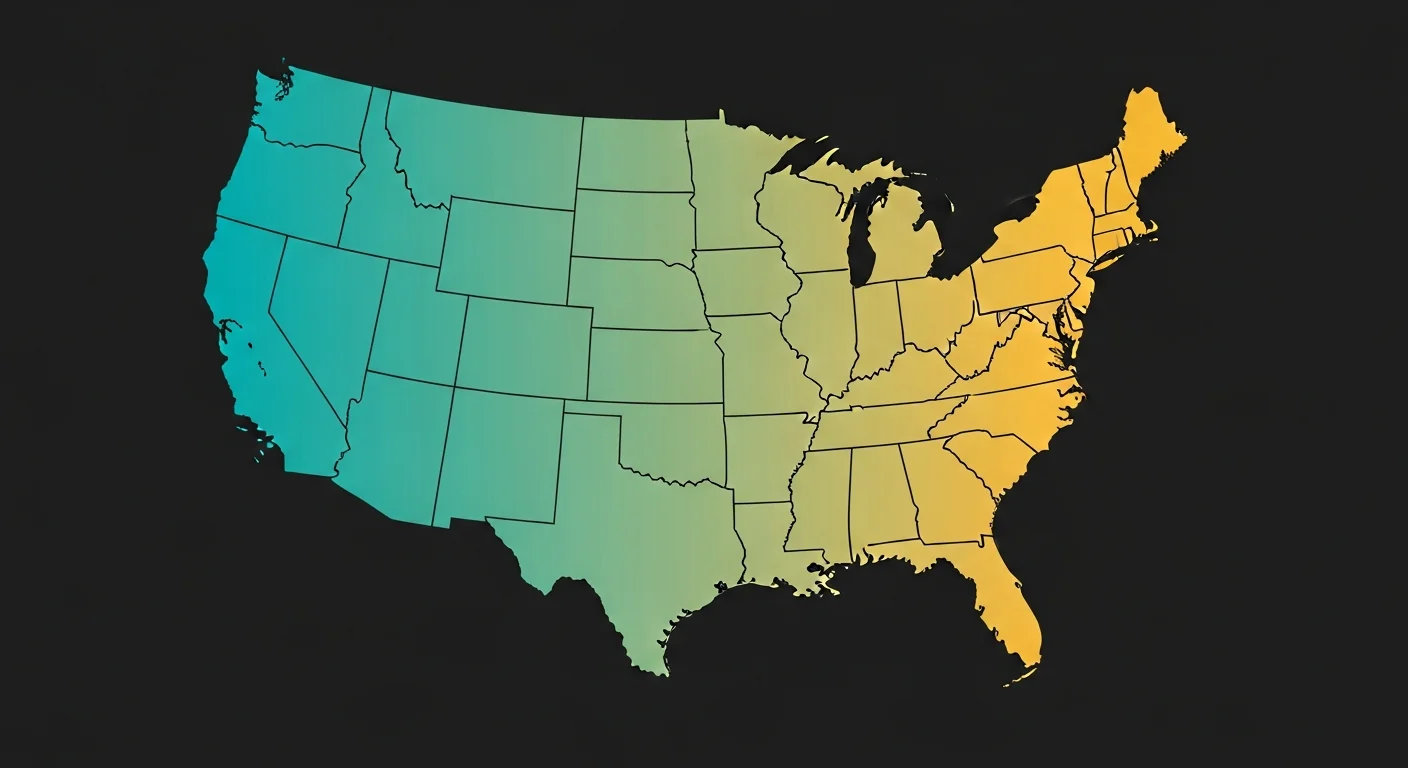
Renters insurance is one of the most affordable types of coverage available, but what you pay depends heavily on where you live. The national average is roughly $18 per month ($216 per year), according to data compiled by the Insurance Information Institute. However, renters in Mississippi and Louisiana pay nearly double the national average, while those in North Dakota and Vermont pay well below it. This guide breaks down average renters insurance costs for all 50 states and explains the factors behind the price differences.
If you are deciding whether renters insurance is worth it, our renters insurance guide covers everything from what it protects to how claims work.
Quick Answer
Average renters insurance costs range from about $10 per month in low-risk states like Vermont and North Dakota to $30 or more per month in high-risk states like Mississippi, Louisiana, and Oklahoma. The national average is approximately $18 per month or $216 per year for $30,000 in personal property coverage with a $1,000 deductible.
Key Takeaways
- The national average renters insurance cost is $18 per month ($216 per year) for standard coverage
- Mississippi, Louisiana, and Oklahoma are the most expensive states, averaging $28 to $35 per month
- Vermont, North Dakota, and Maine are the cheapest, averaging $10 to $12 per month
- Weather risk, crime rates, state regulations, and litigation environments drive most cost differences
- Bundling with auto insurance, raising your insurance deductible, and improving credit can reduce premiums by 10% to 30%
- Coverage amount, deductible choice, and claims history also significantly affect your rate
Average Renters Insurance Cost by State: Full Table
The table below shows estimated average monthly and annual renters insurance costs for all 50 states plus Washington D.C. These figures assume $30,000 in personal property coverage with a $1,000 deductible and represent averages across multiple insurers. Individual rates will vary based on your specific location, coverage amount, deductible, credit score, and claims history. Data is compiled from rate analyses by Insurance.com, ValuePenguin, and Bankrate.
| State | Avg Monthly | Avg Annual | Relative Cost |
|---|---|---|---|
| Alabama | $22 | $264 | Above average |
| Alaska | $15 | $180 | Below average |
| Arizona | $16 | $192 | Below average |
| Arkansas | $23 | $276 | Above average |
| California | $17 | $204 | Average |
| Colorado | $18 | $216 | Average |
| Connecticut | $16 | $192 | Below average |
| Delaware | $15 | $180 | Below average |
| Florida | $19 | $228 | Average |
| Georgia | $22 | $264 | Above average |
| Hawaii | $14 | $168 | Below average |
| Idaho | $14 | $168 | Below average |
| Illinois | $18 | $216 | Average |
| Indiana | $17 | $204 | Average |
| Iowa | $14 | $168 | Below average |
| Kansas | $20 | $240 | Above average |
| Kentucky | $17 | $204 | Average |
| Louisiana | $30 | $360 | Most expensive |
| Maine | $12 | $144 | Cheapest tier |
| Maryland | $16 | $192 | Below average |
| Massachusetts | $15 | $180 | Below average |
| Michigan | $18 | $216 | Average |
| Minnesota | $14 | $168 | Below average |
| Mississippi | $35 | $420 | Most expensive |
| Missouri | $19 | $228 | Average |
| Montana | $15 | $180 | Below average |
| Nebraska | $17 | $204 | Average |
| Nevada | $16 | $192 | Below average |
| New Hampshire | $12 | $144 | Cheapest tier |
| New Jersey | $16 | $192 | Below average |
| New Mexico | $19 | $228 | Average |
| New York | $17 | $204 | Average |
| North Carolina | $16 | $192 | Below average |
| North Dakota | $11 | $132 | Cheapest |
| Ohio | $17 | $204 | Average |
| Oklahoma | $28 | $336 | Most expensive |
| Oregon | $15 | $180 | Below average |
| Pennsylvania | $16 | $192 | Below average |
| Rhode Island | $15 | $180 | Below average |
| South Carolina | $19 | $228 | Average |
| South Dakota | $14 | $168 | Below average |
| Tennessee | $20 | $240 | Above average |
| Texas | $24 | $288 | Above average |
| Utah | $14 | $168 | Below average |
| Vermont | $10 | $120 | Cheapest |
| Virginia | $16 | $192 | Below average |
| Washington | $15 | $180 | Below average |
| Washington D.C. | $16 | $192 | Below average |
| West Virginia | $17 | $204 | Average |
| Wisconsin | $14 | $168 | Below average |
| Wyoming | $15 | $180 | Below average |
Note: Rates are estimated averages based on $30,000 personal property coverage with a $1,000 deductible. Actual rates vary by insurer, location within the state, coverage amount, and individual factors. Sources: Insurance.com, ValuePenguin, and Bankrate rate analyses (2025-2026).
State-by-State Breakdown: Why Costs Differ
Texas: $24/Month Average
Texas renters pay above the national average due to the state's exposure to hurricanes along the Gulf Coast, severe hailstorms across North Texas, and tornadoes in Tornado Alley regions. The Dallas-Fort Worth area experiences some of the highest hail damage claims in the country. Texas is also a non-regulated insurance market, meaning insurers have more flexibility to set rates based on localized risk. Additionally, Texas has higher-than-average property crime rates in several major metros, which increases theft claim frequency. Renters in coastal cities like Houston and Corpus Christi typically pay more than those in Austin or San Antonio due to hurricane exposure.
Florida: $19/Month Average
Despite Florida's hurricane risk, renters insurance costs are close to the national average because renters policies only cover contents (not the building structure, which is the landlord's responsibility). The building's hurricane risk is priced into the landlord's policy, not yours. However, renters in South Florida (Miami, Fort Lauderdale) and coastal areas may pay slightly more due to theft risk and higher claim frequency. Florida also has a competitive insurance market with many carriers, which helps keep renters insurance rates moderate compared to homeowners insurance, which has spiked in the state.
California: $17/Month Average
California renters insurance is near the national average despite the state's high cost of living. This is because earthquakes (California's primary natural disaster risk) are excluded from standard renters policies. Wildfire risk does affect rates in fire-prone areas, but most urban renters in Los Angeles, San Francisco, and San Diego are in lower-risk zones. California's Proposition 103 also requires insurers to get rate increases approved by the Department of Insurance, which constrains premium growth. Renters in high-crime urban areas may pay more, but overall, California is average for renters insurance.
New York: $17/Month Average
New York renters insurance costs are moderate despite the state's high cost of living. New York City renters might expect higher rates, but the city's dense building construction (steel and concrete) actually reduces fire and weather damage risk compared to wood-frame suburban homes. New York also has strong consumer protection regulations that keep insurance rates in check. Upstate New York renters typically pay less than NYC renters due to lower crime and population density. The state's low tornado and hurricane risk (compared to Gulf states) also contributes to below-average costs.
Pennsylvania: $16/Month Average
Pennsylvania is one of the more affordable states for renters insurance. The state has moderate weather risk (no hurricanes, limited tornado activity) and a well-regulated insurance market. Pittsburgh and Philadelphia renters may pay slightly more due to urban crime rates, but overall, the state benefits from a stable claims environment. Pennsylvania's building codes and relatively low exposure to catastrophic natural disasters keep insurer losses manageable, which translates to lower insurance premiums for renters.
Illinois: $18/Month Average
Illinois sits right at the national average. Chicago renters pay higher rates due to property crime, while suburban and downstate Illinois renters often pay less. The state faces moderate severe weather risk (tornadoes, thunderstorms, winter storms) but nothing comparable to Gulf Coast states. Illinois has a competitive insurance market with many national and regional carriers offering renters policies, which helps keep rates from climbing. Building type matters significantly in Chicago, as older buildings with outdated wiring or heating systems may trigger higher premiums.
Ohio: $17/Month Average
Ohio offers average renters insurance rates with moderate variation across the state. Cleveland, Columbus, and Cincinnati have slightly higher rates due to urban risk factors (theft, vandalism), while smaller cities and rural areas are cheaper. Ohio experiences some severe weather (thunderstorms, occasional tornadoes, winter storms) but not at the frequency or intensity of Southern or Plains states. The state's insurance market is competitive, and Ohio does not have the lawsuit-friendly legal environment that drives up costs in states like Louisiana and Mississippi.
Georgia: $22/Month Average
Georgia renters pay above-average rates driven by several factors: frequent severe thunderstorms and tornadoes, relatively high property crime rates in Atlanta and other metros, and a legal environment that tends to produce higher insurance claim settlements. Atlanta, the state's largest rental market, has crime rates that push up theft claim costs. Georgia also sits close enough to the coast that tropical storms and hurricanes occasionally affect inland areas, adding weather risk to premiums. Renters in suburban areas outside of Atlanta typically pay less than those in the city.
6 Factors That Affect Your Renters Insurance Cost
1. Location (State, City, and Neighborhood)
Your address is the single biggest factor in your rate. Insurers consider local crime rates, weather risk, proximity to fire stations, and building construction type. A renter in a low-crime suburb pays significantly less than one in a high-crime urban neighborhood, even within the same state.
2. Coverage Amount
Higher coverage limits mean higher premiums. A policy with $50,000 in personal property coverage costs more than one with $20,000. To figure out the right amount, see our guide on how much renters insurance coverage you need.
3. Deductible
Your insurance deductible is the amount you pay before insurance kicks in. A higher deductible ($1,000 vs. $500) lowers your premium but means more out-of-pocket cost if you file a claim. Most renters choose a $500 or $1,000 deductible.
4. Credit Score (Where Allowed)
In most states, insurers use credit-based insurance scores to help set rates. A higher credit score generally means lower premiums. California, Maryland, Massachusetts, Hawaii, and a few other states restrict or prohibit the use of credit in insurance pricing.
5. Claims History
If you have filed renters or homeowners insurance claims in the past 3 to 5 years, your premiums will likely be higher. Even claims you filed on a previous policy can follow you through the Comprehensive Loss Underwriting Exchange (CLUE) database.
6. Replacement Cost vs. Actual Cash Value
Policies with replacement cost coverage typically cost $2 to $5 more per month than actual cash value (ACV) policies. Replacement cost pays to replace items at current prices, while ACV deducts depreciation. For things not covered by your policy, see our guide to renters insurance exclusions.
7 Tips to Lower Your Renters Insurance Premium
- Bundle with auto insurance: Most insurers offer 5% to 15% discounts when you bundle renters and auto policies.
- Raise your deductible: Increasing from $500 to $1,000 can lower your premium by 15% to 25%.
- Install security devices: Deadbolts, smoke detectors, burglar alarms, and smart home security systems qualify for discounts of 5% to 20%.
- Maintain good credit: In states that allow credit-based pricing, improving your credit score can significantly reduce your rate.
- Choose a newer building: Apartments with updated wiring, plumbing, and fire suppression systems carry lower risk and lower premiums.
- Avoid unnecessary claims: Small claims (near or below your deductible) are not worth filing because they raise future premiums without meaningful payouts.
- Shop around annually: Get quotes from at least 3 insurers each year. Rates vary significantly between companies for identical coverage.
Data Sources
- Bureau of Labor Statistics Consumer Expenditure Survey (2024)
- MERIC Cost of Living Index
- Bureau of Economic Analysis Regional Price Parities
- HUD Fair Market Rents
- U.S. Census Bureau American Community Survey
- Zillow Observed Rent Index (ZORI)
Frequently Asked Questions
What is the cheapest state for renters insurance?
Vermont is typically the cheapest state for renters insurance, with average premiums around $10 per month ($120 per year). North Dakota, Maine, and New Hampshire are also among the cheapest states, averaging $11 to $12 per month. These states benefit from low crime rates, minimal severe weather risk, and smaller population density.
What is the most expensive state for renters insurance?
Mississippi is typically the most expensive state, with average premiums around $35 per month ($420 per year). Louisiana and Oklahoma also rank among the most expensive at $28 to $30 per month. These states face frequent severe weather (hurricanes, tornadoes, hailstorms), higher crime rates, and litigation-friendly legal environments that drive up insurer costs.
Does my credit score affect renters insurance cost?
In most states, yes. Insurers use credit-based insurance scores as one factor in setting rates. Studies by the Federal Trade Commission have found a statistical correlation between credit scores and insurance claim frequency. However, California, Maryland, Massachusetts, Hawaii, Oregon, and Utah either prohibit or restrict the use of credit in insurance pricing.
How much does renters insurance cost per month on average?
The national average is about $18 per month ($216 per year) for a policy with $30,000 in personal property coverage, $100,000 in liability coverage, and a $1,000 deductible. Your actual cost depends on your state, city, coverage amount, deductible, credit score, and claims history.
Does renters insurance cost more in cities?
Generally, yes. Urban areas tend to have higher crime rates, more claims, and greater population density, all of which increase risk and premiums. For example, a renter in downtown Atlanta may pay 20% to 40% more than someone in a suburban Georgia town for the same coverage amount.
Can I lower my renters insurance cost by raising the deductible?
Yes. Increasing your deductible from $500 to $1,000 typically lowers your premium by 15% to 25%. Going from $500 to $2,000 can save even more. Just make sure you can afford the higher deductible if you need to file a claim.
Does bundling renters and auto insurance save money?
Yes. Most insurers offer multi-policy discounts of 5% to 15% when you bundle renters insurance with auto insurance. Some companies offer even larger discounts. Bundling also simplifies billing and claims management since you deal with one company.
Why is renters insurance so expensive in Louisiana and Mississippi?
Both states face frequent hurricanes, severe thunderstorms, and tornadoes. They also have higher-than-average property crime rates and litigation environments that produce larger insurance claim settlements. Louisiana in particular has been called "the judicial hellhole" by insurance industry groups due to its high rate of insurance-related lawsuits, which increases insurer costs across the board.
Related Reading
- Renters Insurance 2026: Complete Guide to Coverage, Cost, and Claims
- What Renters Insurance Does NOT Cover: 12 Exclusions [2026]
- Replacement Cost vs Actual Cash Value: Which Saves You More?
- How Much Renters Insurance Do I Need? [2026 Guide]
Financial Disclaimer: This article is for informational purposes only and does not constitute insurance advice. The rates shown are estimated averages compiled from publicly available data by Insurance.com, ValuePenguin, and Bankrate as of early 2026. Your actual premium will depend on your insurer, specific location, coverage amount, deductible, credit score, claims history, and other individual factors. Always obtain personalized quotes from multiple insurers before purchasing coverage.