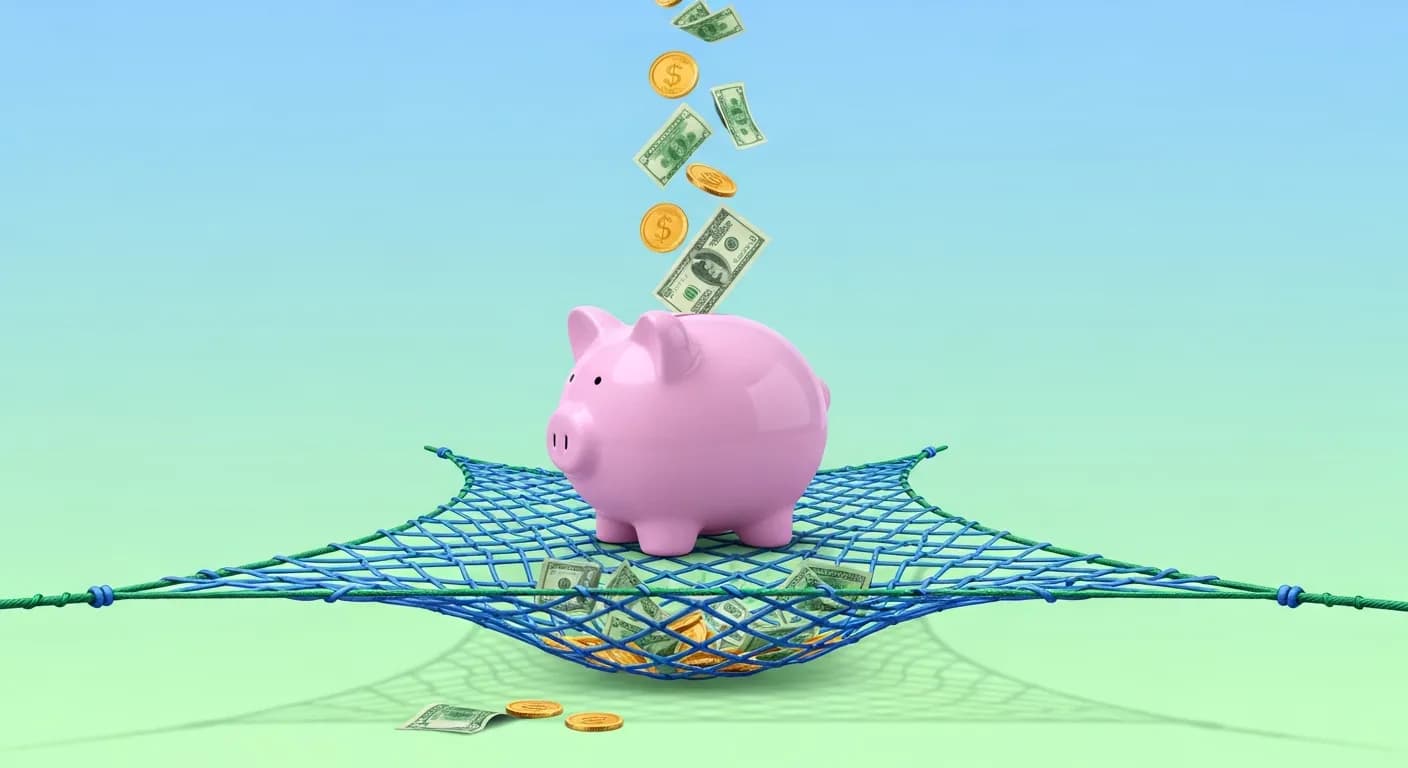

Most people have tried a budgeting app, spreadsheet template, or envelope system at some point, and most abandon them within weeks. The problem is rarely discipline. It is that overly complex systems are not sustainable. Here is how to build a budget that actually works for your life.
The truth about budgeting is that the "best" system is the one you will actually use. A complicated spreadsheet with 47 categories might be technically optimal, but if you abandon it after two weeks, it is worthless. Simplicity and sustainability beat perfection every time.
Why Most Budgets Fail
Before we build something that works, let us understand why budgets typically fail:
- Too restrictive: Cutting everything fun leads to burnout and rebellion spending
- Too complicated: 30+ categories create overwhelm and tracking fatigue
- Not based on reality: Arbitrary numbers instead of actual spending patterns
- No room for error: One slip-up feels like total failure
- Treats symptoms, not causes: Focuses on restriction instead of priorities
A successful budget avoids these pitfalls. It is simple, realistic, flexible, and focused on what matters most to you.
The 50/30/20 Framework
The simplest budgeting framework allocates your after-tax income into three categories:
- 50% Needs: Essential expenses you cannot avoid, housing, utilities, groceries, transportation, insurance, minimum debt payments
- 30% Wants: Everything that improves quality of life but is not essential, dining out, entertainment, subscriptions, hobbies, travel
- 20% Savings and Debt: Emergency fund, retirement contributions, extra debt payments, other savings goals
Why This Works
The 50/30/20 rule works because:
- Only three categories to track, reducing complexity
- 30% for wants acknowledges you are human and need enjoyment
- Automatically prioritizes savings without making it feel like deprivation
- Scales with income, percentages work whether you earn $40,000 or $150,000
Adjusting for Your Situation
These percentages are guidelines, not laws. Adjust based on reality:
- High cost-of-living area? Your needs might be 60%, wants 20%, savings 20%
- Aggressive debt payoff? Try 50% needs, 20% wants, 30% savings/debt
- Early career with low income? 60% needs, 25% wants, 15% savings is fine temporarily
Step-by-Step Budget Creation
Step 1: Calculate Your After-Tax Income
Add up what actually hits your bank account each month after taxes and deductions. If you have variable income, use the average of the last six months or your lowest recent month for conservative planning.
Step 2: Track Current Spending
Before setting arbitrary limits, understand where your money actually goes. Track every expense for 30 days using an app, spreadsheet, or even a notebook. No judgment, just observation.
Most people are shocked by what they find. Small daily purchases add up. Subscriptions accumulate. The $5 coffee habit costs $1,800 per year.
Step 3: Categorize Into Needs, Wants, Savings
Review your tracked expenses and sort them:
Needs:
- Rent or mortgage
- Utilities (electric, gas, water)
- Groceries (food, not alcohol or snacks)
- Transportation (car payment, gas, insurance, transit)
- Health insurance and medical
- Minimum debt payments
- Childcare if required for work
Wants:
- Dining out and takeout
- Entertainment and streaming
- Shopping beyond essentials
- Hobbies and recreation
- Travel and vacations
- Gym memberships
- Upgraded phone plans
Savings and Debt:
- Emergency fund contributions
- Retirement contributions (401k, IRA)
- Extra debt payments beyond minimums
- Saving for specific goals
Step 4: Compare to the Framework
Calculate your current percentages and compare to the 50/30/20 target. If needs are 70% of income, you are house-poor or car-poor and may need to make structural changes. If wants are 50%, there is significant room for reallocation.
Step 5: Set Realistic Targets
Do not try to go from 5% savings to 20% in one month. Gradual change is sustainable. If you are saving nothing, start with 5% and increase 2% every few months.
Step 6: Automate What You Can
The best budget runs on autopilot:
- Set up automatic transfer to savings on payday
- Automate retirement contributions through payroll
- Use autopay for fixed bills
- What remains after automation is your spending money
This "pay yourself first" approach ensures savings happen before you have a chance to spend the money. Put automated savings into a high-yield savings account or money market account where it earns 4% to 5% APY instead of sitting in a checking account at 0.01%.
Budgeting Tools That Actually Help
For Hands-Off People: Automated Apps
- YNAB (You Need A Budget): Best for intentional budgeters who want control
- Copilot: Modern app with clean design and AI insights
- Monarch Money: Great for couples managing joint finances
For Spreadsheet Lovers
- Google Sheets with a simple three-category template
- Link bank accounts using Tiller Money for automatic imports
For Cash Flow Followers
- The "envelope system" using separate accounts or literal envelopes
- Weekly allowance transfers to a spending account
Popular Budgeting Methods Compared
The 50/30/20 framework is a great starting point, but it is not the only approach. Different methods work better for different personalities and financial situations. The Consumer Financial Protection Bureau recommends finding a system that matches your habits and comfort level. Here is how the most popular methods compare:
| Method | How It Works | Best For | Effort Level |
|---|---|---|---|
| 50/30/20 | Allocate 50% to needs, 30% to wants, 20% to savings/debt | Beginners, simple lifestyle | Low |
| Zero-Based | Assign every dollar a job so income minus expenses equals zero | Detail-oriented planners, variable income | High |
| Envelope System | Use physical or digital envelopes for spending categories; stop when envelope is empty | Overspenders, cash-based households | Medium |
| Pay-Yourself-First | Automate savings and debt payments first; spend what remains freely | Savers who hate tracking, high earners | Low |
| 80/20 Rule | Save 20%, spend 80% however you want with no category tracking | Minimalists, those who find budgeting stressful | Very Low |
The zero-based budget, popularized by YNAB (You Need A Budget), is particularly effective for people with irregular income such as freelancers and gig workers. By assigning every incoming dollar to a specific purpose, it prevents the common trap of spending money before it has been allocated to bills and savings.
The envelope system works well for households that struggle with overspending in specific categories like dining out or entertainment. When the envelope is empty, spending stops for that category until the next month. Digital versions of this system are available through apps like Goodbudget and YNAB.
Month-by-Month Budget Setup Walkthrough
Building a sustainable budget takes about 90 days. Here is a realistic timeline that accounts for the learning curve most people experience:
Month 1: Observe and Record
Do not change anything yet. Simply track every dollar you spend using an app, spreadsheet, or notebook. The goal is to see reality clearly, without judgment. At month's end, categorize all expenses into needs, wants, and savings. Calculate the percentage for each. Most people discover they are spending 5-15% more than they realized, often on small recurring purchases they had forgotten about.
Month 2: Set Targets and Adjust
Based on your Month 1 data, set realistic targets for each category. Do not aim for perfection. If your needs are 65% of income, target 60% for Month 2 instead of jumping straight to 50%. Identify your top 3 "leaks", categories where spending exceeds what you feel is reasonable, and focus on reducing those. Set up one automated savings transfer, even if it is just $50 per payday. Build your emergency fund as a first priority.
Month 3: Refine and Automate
Review what worked and what did not in Month 2. Adjust categories that were too tight or too loose. Add automation for recurring bills and savings contributions. By the end of Month 3, most of your budget should run on autopilot. You should only need to actively manage discretionary spending. Begin directing freed-up cash toward your highest-priority financial goal, whether that is paying off debt or building savings.
Months 4-6: Build the Habit
Check in weekly for 5-10 minutes. Compare actual spending to targets. Make small adjustments as needed. After six months of consistent tracking and adjusting, budgeting becomes second nature rather than a chore. According to research published in the European Journal of Social Psychology, it takes an average of 66 days to form a new habit, so persistence through the first two months is critical.
Common Budgeting Mistakes to Avoid
- Forgetting irregular expenses: Annual subscriptions, car registration, holiday gifts, property taxes, and insurance premiums are predictable but easy to overlook. Total all annual irregular expenses and divide by 12 to create a monthly sinking fund. The average household has $2,000-$4,000 in annual irregular expenses that can derail a budget if not planned for.
- No fun money: A budget with zero discretionary spending leads to rebellion spending. According to American Psychological Association research, financial restriction without any allowance for enjoyment increases stress and reduces long-term adherence to financial plans. Build in at least a small amount for guilt-free spending.
- Not reviewing regularly: Check in weekly at first, then monthly once habits form. A budget that is set and forgotten gradually becomes inaccurate as spending patterns shift.
- Beating yourself up: One bad week does not ruin a year, adjust and continue. Perfectionism is the enemy of progress in budgeting.
- Making it a solo project: If you have a partner, budget together. According to the Ramsey Solutions State of Personal Finance report, couples who budget together report higher financial satisfaction and lower conflict about money.
- Setting unrealistic goals: Trying to cut spending by 40% in one month is a recipe for failure. Aim for 5-10% reductions per month until you reach your target allocation.
- Ignoring income growth opportunities: Budgeting alone cannot solve an income problem. If your essential expenses genuinely exceed 70% of your income even after cuts, focus on increasing income through raises, side income, or career changes alongside budgeting efforts.
When Your Budget Does Not Work
If you consistently cannot stick to your budget, do not blame willpower. Look for structural problems:
- Income too low: Sometimes the math simply does not work and you need to increase income
- Housing too expensive: If rent exceeds 30% of income, consider moving or roommates
- Car payment too high: Expensive cars are wealth killers, consider downsizing
- Categories too rigid: Build in buffer money for flexibility
The Bottom Line
A budget is not about restriction, it is about intention. It is the tool that ensures your money goes toward what actually matters to you instead of disappearing into random expenses.
Start simple. Track for a month. Set realistic goals. Automate what you can. Review regularly. And remember: progress over perfection.
Once you have a working budget, learn how to build wealth on any income and why an emergency fund should be your first savings priority.
Frequently Asked Questions
What is the best budgeting method for beginners?
The 50/30/20 method is widely considered the best starting point for budgeting beginners because it is simple, flexible, and does not require tracking every individual expense. You allocate 50% of after-tax income to needs (housing, groceries, insurance, minimum debt payments), 30% to wants (dining out, entertainment, subscriptions), and 20% to savings and extra debt payments. This approach gives you a clear framework without the burden of categorizing every purchase. Once you are comfortable with 50/30/20, you can refine your budget with more specific categories if needed.
How does the 50/30/20 rule work?
The 50/30/20 rule divides your after-tax income into three broad categories. If you bring home $5,000 per month, $2,500 goes to needs such as rent, utilities, groceries, transportation, and insurance. Up to $1,500 goes to wants like dining out, streaming services, hobbies, and non-essential shopping. The remaining $1,000 goes to savings goals and additional debt repayment beyond minimums. The strength of this system is flexibility within each category: you do not need to track whether you spent $42 or $47 on coffee, only whether your total wants stay within 30%. Adjust the percentages based on your situation, particularly if your housing costs exceed 30% of income.
How do I budget with irregular income?
For freelancers, gig workers, or anyone with variable income, use a baseline budget built around your lowest expected monthly income. Calculate the minimum you have earned in any month over the past year and budget your essential expenses against that number. When higher-income months occur, direct the surplus toward building a larger emergency fund (aim for 6-9 months instead of the standard 3-6), then toward savings goals and debt payoff. Some people find it helpful to pay themselves a consistent monthly salary from a separate checking account, depositing all irregular income into that account first.
What are the best free budgeting apps in 2026?
Several free apps can help you manage your budget effectively. Mint (now part of Credit Karma) offers automatic transaction categorization and budget tracking. YNAB (You Need A Budget) follows a zero-based approach and offers a free trial, though it requires a paid subscription after the trial. EveryDollar provides a straightforward zero-based budgeting interface with a free tier. For couples, Honeydue allows partners to share financial information and track spending together. Spreadsheet users may prefer Google Sheets templates that offer full customization without app restrictions. The best app is whichever one you will actually open and use consistently.
How do I stick to a budget long-term?
The most effective way to stick to a budget is to automate as much as possible. Set up automatic transfers to savings accounts on payday before you have a chance to spend that money. Use automatic bill pay for fixed expenses. Build in a realistic fun money allocation so you do not feel deprived. Review your budget weekly (it takes less than 10 minutes) and monthly for bigger adjustments. Expect imperfect months and treat them as data rather than failures. Finally, tie your budget to specific goals you care about, such as a vacation, a down payment, or debt freedom. People who budget toward meaningful goals are significantly more likely to maintain the habit than those who budget purely for restriction.